






Introduction
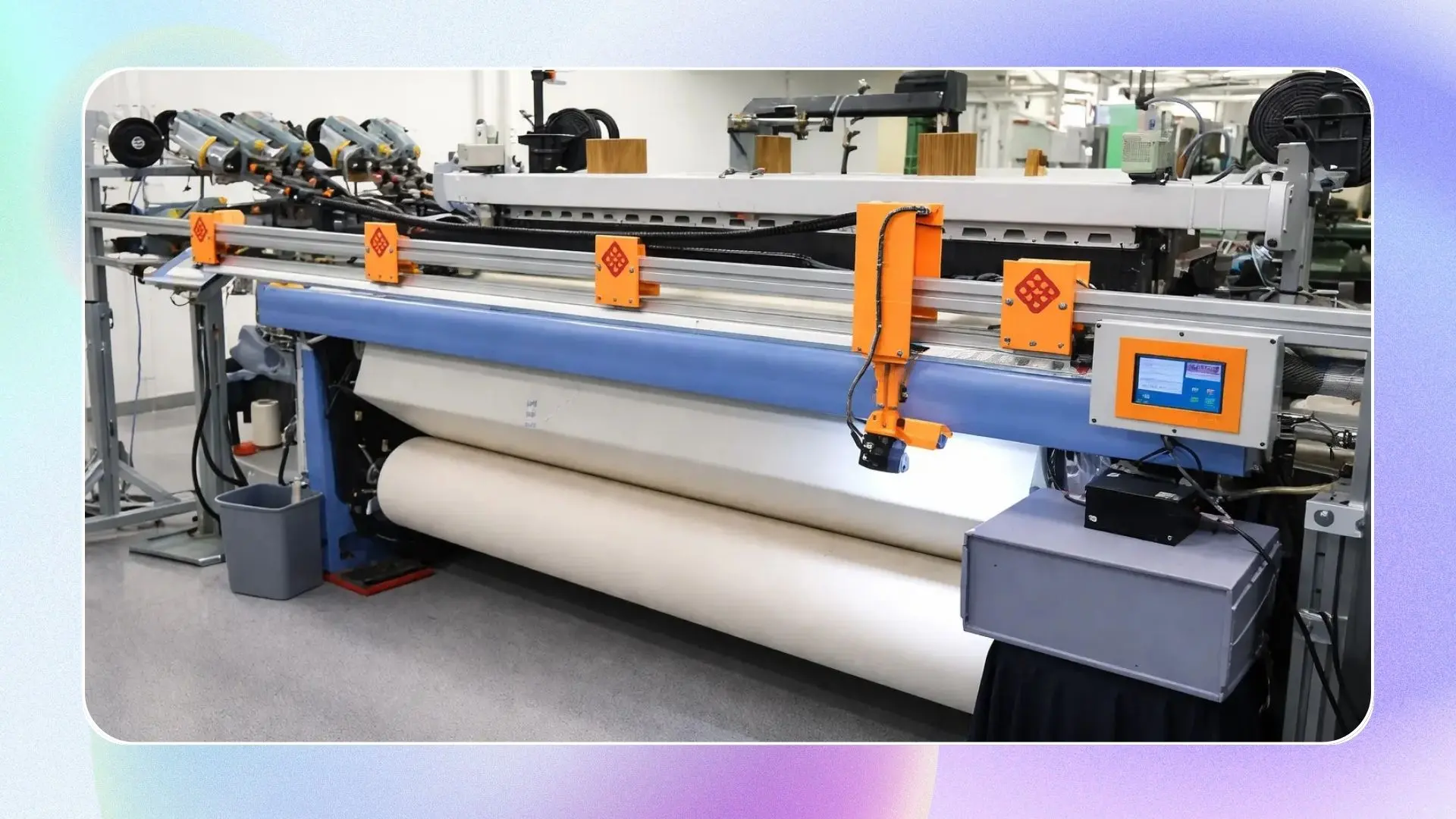
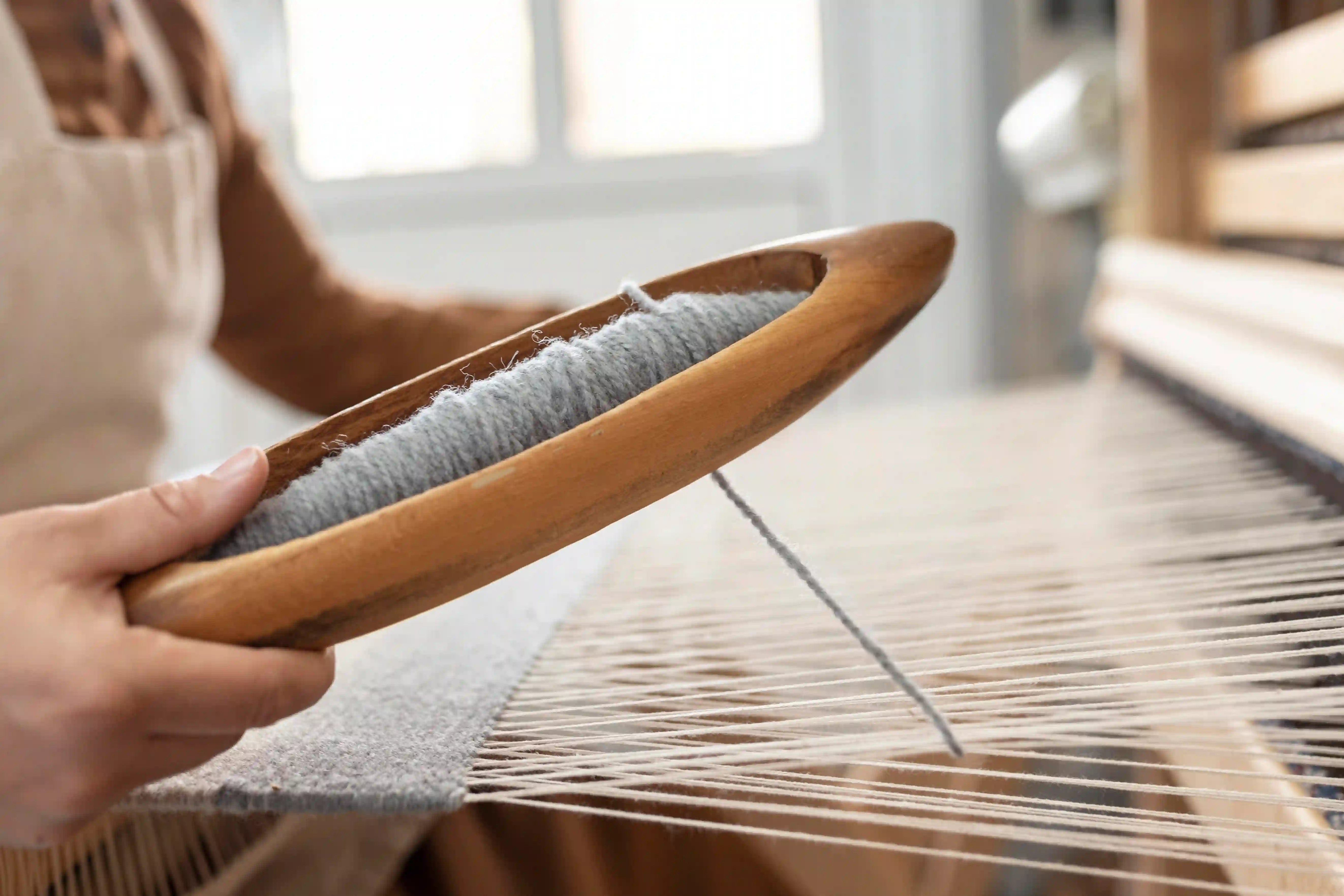
By studying historical documents and examining recorded statistics on textile production across different centuries, one can clearly recognize the antiquity of the textile and weaving industry in Iran. From past centuries to the present day, the textile industry has been one of the most important industries in the country in terms of employment generation, production growth, and foreign exchange earnings, and it has long been regarded as a traditional art.
From the very beginning of weaving in Iran, which dates back to the late Parthian period and the early Sassanian era, silk fabric production began with the importation of silkworms. Later, in the 17th century AD, corresponding to the Safavid era in Iran, textile weaving became one of the main handicraft industries of the country. Eventually, in the year 1229 AH, approximately 172 years ago, the first European-style textile factory was established in Iran, and shortly thereafter, Iran emerged as a pioneer of the textile industry in the Middle East.
About one hundred years ago, with improvements in purchasing power and public culture, the use of welfare facilities became accessible to the majority of people. Among these facilities were clothing and household furnishings. Prior to that period, only kings and high-ranking social classes used domestically produced fabrics for clothing and basic furniture such as tables and chairs in their homes. Consequently, with increasing demand and advancements in tools and machinery, the first particleboard manufacturing factory was established in 1325 AH in Chamkhaneh, utilizing forest and agricultural waste to produce panel furniture, wardrobes, chests, tables, beds, and similar items.
As a result of the development of the furniture industry over the past century, upholstery fabric production initially emerged using sheep and goat wool and warp–weft weaving technology in the cities of Yazd and Mashhad, which became the first centers of upholstery fabric production in Iran.
Today, despite numerous challenges imposed on the country’s textile industry, Iran continues to rely on the long-standing experience of industry veterans and the determination of its youth to present Iranian textiles in global markets, ensuring that Iran’s centuries-old textile industry remains one of the pillars of the national economy. Accordingly, this article provides a review of the history of Iran’s textile industry with a focus on upholstery fabrics.
Keywords: Textile history, weaving, textiles
History of the Production of the First Textiles in Iran
In 419 BC (approximately 2,700 years ago), silkworms were imported from China to Iran for the first time, marking the beginning of textile production in the country. From around 300 AD (approximately 1,900 years ago), coinciding with the Sassanian period, silk production began domestically, leading to the emergence of Sassanian textiles. As a result, from the third century AD onward, the production of clothing fabrics underwent significant transformation within the country.
Furthermore, from the late fifth century AD to the early seventh century AD, textile and clothing production experienced continuous growth. According to historical records, in the 17th century AD (about 500 years ago), textile weaving, carpet weaving, and embroidery were considered among Iran’s handicraft industries, corresponding to the Safavid era. A century later, during the Qajar period, silk and wool textiles, weaving, and embroidery reached their peak in Iran.
After another century, in the 19th century, Russian textiles entered Iran. With technological advancements and the analysis of imported fabrics, the first European-style factory was established in Iran in 1229 AH (172 years ago). This factory was among the first institutions in the country to utilize modern technology for the production of cotton fabrics.
At a time when spinning and knitting had become global occupations, Iran also began producing worsted fabrics from silk, cotton, wool, and linen. During the same period, spinning and weaving factories were established in Kashan and Tehran respectively; however, due to the lack of technicians and technical infrastructure, Iran remained dependent on imported textiles. Eventually, to reduce this dependency, Iran entered new economic agreements with its trade partners, and textile factories and other state-owned companies received immediate government support through customs tariffs and non-tariff barriers.
Given favorable conditions, spinning factories were established in Semnan in 1281 AH and in Tabriz in 1287 AH. Additionally, between 1310 and 1317 AH, at least 29 large-scale textile factories were founded by the government and private investors. Eight workshops were also established in Isfahan, followed by two in Yazd, as well as workshops in Kerman and Sari, focusing on knitting and sock production.
By 1319 AH, the number of spinning factories had reached 76 units, employing 24,500 workers in modern textile factories. In 1328 AH, domestic textile production met over 55 percent of national demand, reaching its peak in 1329 AH, when fabric consumption doubled. During this period, raw textile materials were mainly supplied through cotton cultivation.
However, in 1340 AH, an economic recession reduced demand, leading to the closure of many factories. Consequently, industry stakeholders requested the government to ban textile imports. Between 1341 and 1345 AH, the government prohibited foreign investments, prompting the textile industry to pursue exports, which reached 6 percent by 1351 AH. Despite this, strong domestic demand and government support enabled continued growth.
Between 1359 and 1372 AH, production capacity increased but still failed to fully meet domestic demand. From 1363 to 1376 AH, approximately 55 million pieces of fabric were produced in Iran. The Iranian textile industry, comprising spinning, weaving, knitting, dyeing, and printing companies, experienced significant growth in the production of natural fibers and subsequently synthetic fibers.
Following a period of stagnation caused by excessive imports of Chinese textiles, the heavy fabric sector saw renewed growth with the introduction of modern technologies and machinery. In late 1396 AH, the private sector launched one of the largest production lines in the Middle East. Today, the production of warp-knitted and weft-knitted fabrics from synthetic fibers (polyester) stands as a national achievement at the regional level.
History of Upholstery Fabric Production
Based on artifacts preserved in museums and historical texts, a small wire chair discovered in Amlash and dating back 3,500 years, currently housed in the National Museum of Iran, indicates the use of seating furniture in Iran since ancient times. Traditionally, Iranian culture favored sitting, eating, and sleeping on the ground for centuries, while raised seating and thrones were reserved exclusively for royalty. Consequently, the use of tables, chairs, beds, and sofas became common in residential spaces only over the past century.
With the advancement of furniture manufacturing and carpentry around a hundred years ago, upholstery fabric production initially emerged using sheep and goat wool and warp–weft weaving techniques in Yazd and Mashhad. Subsequently, with the introduction of synthetic fibers, the weaving of various fabrics for royal and classical furniture expanded, and due to market demand, upholstery fabrics were also imported from Turkey and China.
Decorative and curtain fabrics were woven using looms equipped with wooden transverse and horizontal frames, employing warp–weft structures and the invention of the warping tool (warp stretcher). Following clothing textiles, these techniques were applied to upholstery and curtain fabrics. From the early Pahlavi period onward, such fabrics were used for chairs, sofas, tablecloths, bed covers, curtains, mattress covers, and pillows. With the advent of railways, upholstery fabrics were also used for train seats and subsequently for automobile seats.
From 1310 AH onward, the production of wooden products, particularly furniture, became increasingly industrialized. In 1325 AH, the establishment of the first particleboard factory in Chamkhaneh using forest and agricultural waste significantly boosted panel furniture production, including cabinets, chests, tables, and beds. Although the furniture industry did not have the same historical depth as the textile industry, its rapid growth was driven by product diversity and widespread applications.
In the late 1350s AH, due to the Iranian Revolution and subsequently the Iran–Iraq war in the 1360s AH, the furniture industry was excluded from essential consumer goods and entered a period of stagnation. However, from the 1370s AH onward, with the introduction of modern machinery and increased market demand, the industry experienced renewed growth and gradually became integrated into the culture of small towns and rural areas. As a result, related industries such as chemicals, foam and sponge manufacturing, and upholstery fabrics witnessed significant increases in demand.
The production of upholstery fabrics evolved from cotton yarns and linen (Santok) as natural fibers to velvet fabrics, initially made from natural fibers and later from synthetic fibers such as viscose and polyester. With the rapid expansion of modern furniture, especially fabric-based furniture such as sofas, couches, dining chairs, office furniture, bedroom sets, curtains, and fabric wall coverings in recent decades, demand for warp-knitted and weft-knitted fabrics surpassed that for traditional woven fabrics.
Today, synthetic fiber knitted fabrics incorporating nanotechnology, antibacterial, waterproof, flame-resistant, and fire-retardant properties, alongside the Iranian furniture industry, represent exportable products with high added value.
Selected Statistics on the Furniture and Upholstery Fabric Industry in Iran
Based on data obtained from the Statistical Center of Iran, the Ministry of Industry, Mine and Trade, the Iran Chamber of Commerce, and the Iran Guilds Chamber, as well as analysis of ISIC activity codes, the following statistics have been compiled (up to the end of 1400 AH):
-
There are 238 large units with more than 50 employees, producing an average of 15 seven-seat furniture sets per day. Assuming 300 working days per year, these units produce approximately 1,170,000 seven-seat furniture sets annually.
-
There are 2,871 medium-sized units with fewer than 50 employees and workshops with around 10 workers engaged in furniture production, repair, upholstery, and reupholstery. On average, they produce 2 seven-seat furniture sets per day over 300 working days, totaling approximately 1,722,600 sets annually.
-
Furniture exports, including comfort and classical seating, dining chairs, kitchen furniture, panel furniture such as cabinets and beds, and office furniture, amounted to approximately 60 million USD in 1400 AH.
-
Furniture imports have been banned over the past five years and have only entered the market through semi-finished parts, smuggling, or informal border trade from western and southern borders.
-
According to the presented data, Iran has the capacity to produce approximately 70 million square meters of heavy upholstery and decorative fabrics, including woven, warp-knitted, and weft-knitted types. Assuming production of one million seven-seat furniture sets, with 65 percent modern furniture requiring approximately 40 meters per set, consumption reaches 26 million square meters. Additionally, 35 percent classical furniture requires approximately 15 meters per set, equaling 6 million square meters. Including 32 million square meters for replacement upholstery and reupholstery, total consumption can be estimated at 50 million square meters. The remaining production capacity is attributed to decorative curtains, wall coverings, and upholstered surfaces.
Conclusion
From ancient times to the present, the textile industry has been one of Iran’s pillars of strength. It can be confidently stated that the impact of this industry on employment, foreign exchange earnings, and production growth surpasses that of many other industries. In addition to its high level of influence, the textile industry is also highly affected by social factors such as excessive imports, promotion of foreign consumption culture, high production costs, outdated machinery, and similar challenges.
Given these obstacles, sustaining and expanding industrial activity is difficult. However, historical analysis shows that just as Iran was among the world’s leading exporters during the fourth and fifth centuries AH, it can once again reclaim its position. The country’s young workforce, supported by the experience of industry veterans, can bring this goal to fruition.
Moreover, Iran’s furniture industry, as a fast-return sector with high value-added products, holds strong export potential in the Persian Gulf region, Iraq, and Central Asian countries. In addition to generating foreign exchange, it can contribute to domestic employment growth, promote recycling practices, optimize resource and energy usage, reduce costs, and ultimately offer competitively priced products.
References
Rabiei, Davood (2004). A New Birth, Wood and Paper Journal, Issue 10, p. 16
Sadri, Nasrin (2008). Iranian Weaving: From Traditional to Industrial, Ayaz Journal, Issues 2 and 3
Iran Guilds Chamber website, ISIC codes for industries and guilds
Statistical Center of Iran website, amar.org.ir.php
Ministry of Industry, Mine and Trade website, ISIC codes, mimt.gov.ir
xr:d:DAFYR5kfiYE:15,j:45872088190,t:23012611
xr:d:DAFYR5kfiYE:15,j:45872088190,t:23012611